



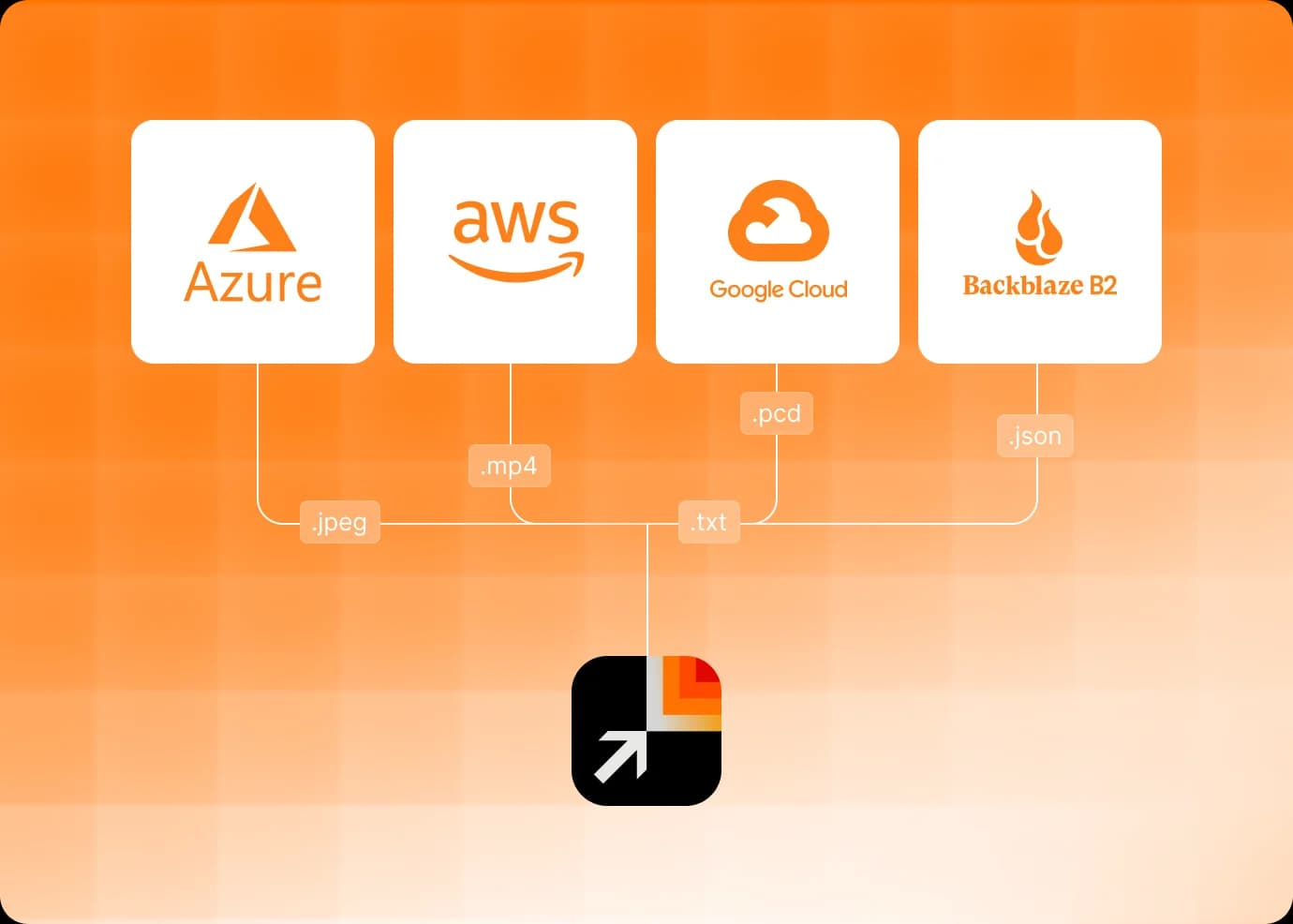
1. Import data from local files and cloud storage
- Upload local datasets and existing annotations
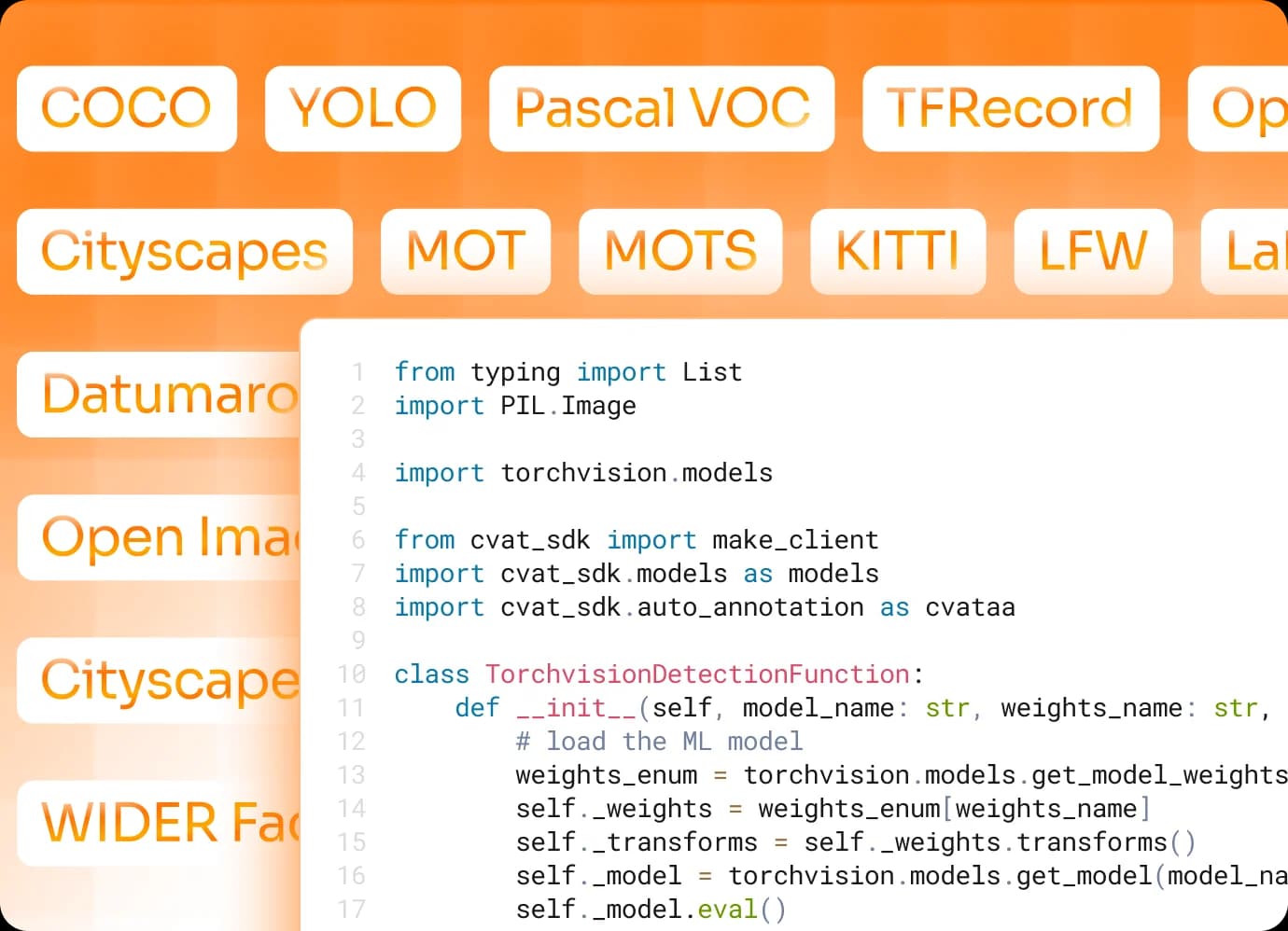
- Connect Amazon S3, Azure Blob Storage, Google Cloud Storage, and other storages
- Use S3-compatible buckets or self-hosted storage
Beyond Vision: CVAT Goes Multimodal and Introduces Audio Annotation. Learn more

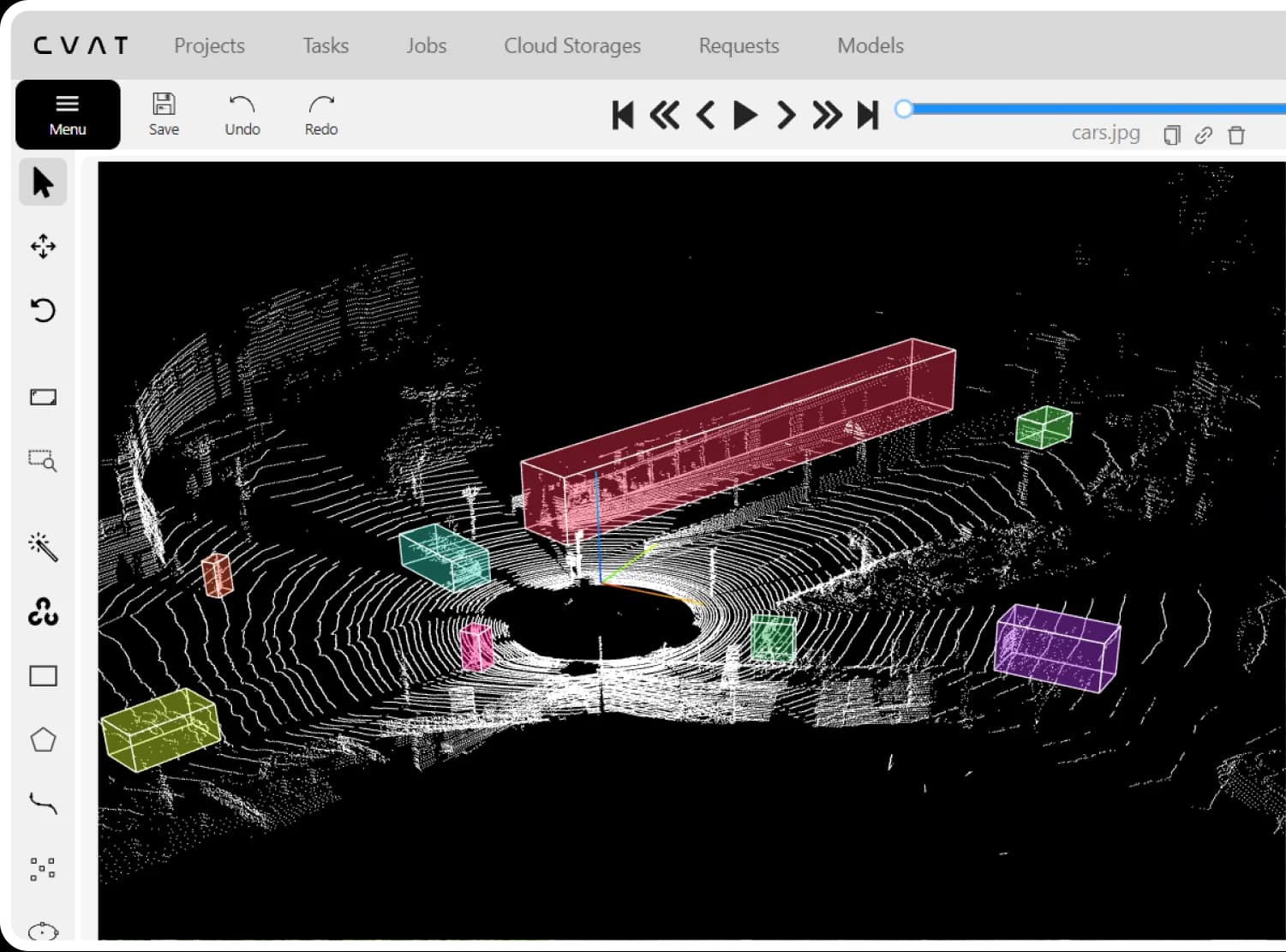
Turn multi-camera video, LiDAR point clouds, and radar capture into model-ready datasets for autonomous driving, ADAS, driver monitoring, and in-cabin perception.
Need to keep your data in your own infrastructure? Explore CVAT Enterprise
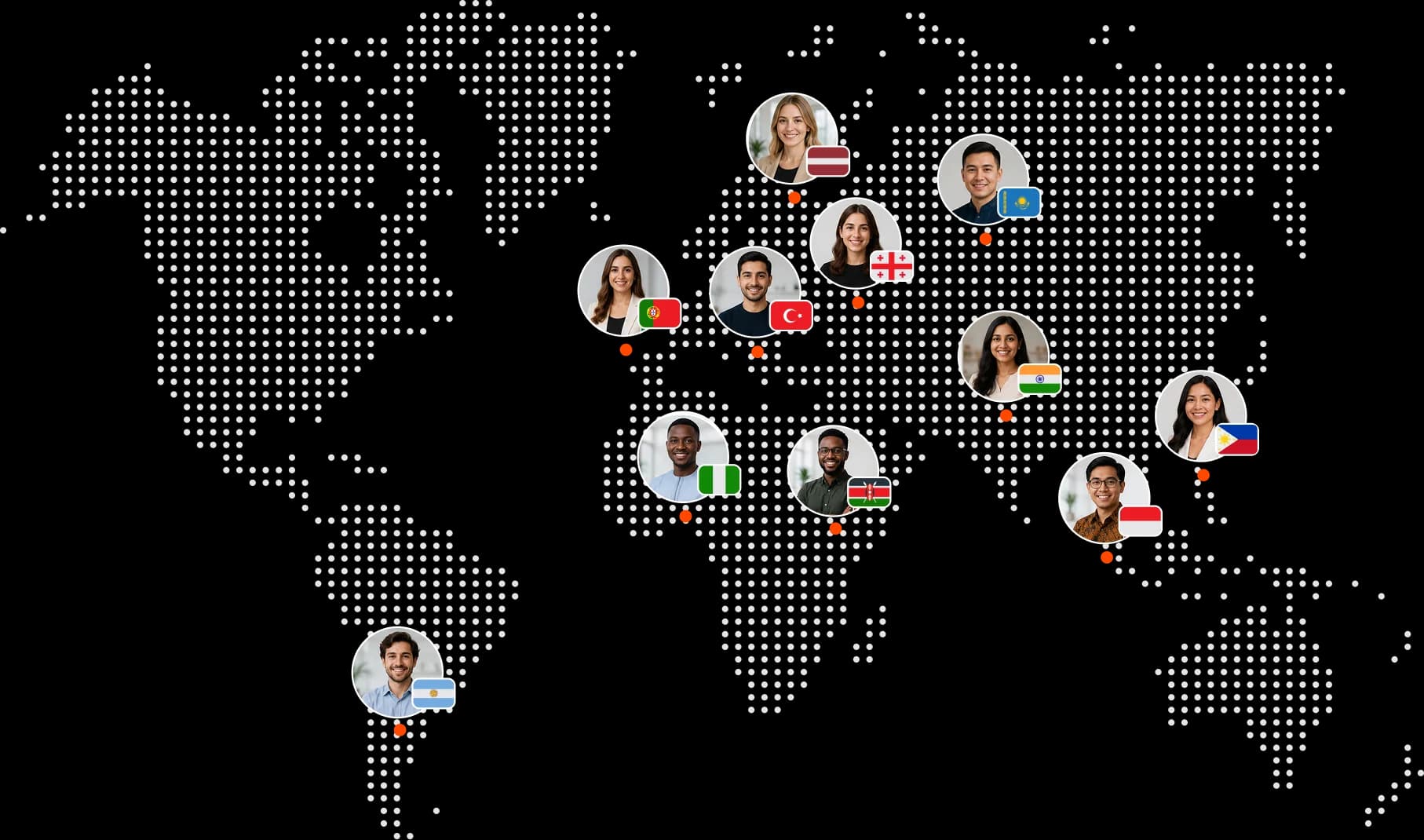
Trusted by ML teams worldwide
Read customer storiesLabel road agents in 2D and 3D, segment lanes and drivable surface, identify traffic signs and signals, and monitor driver and occupant state across camera, LiDAR, and radar capture.

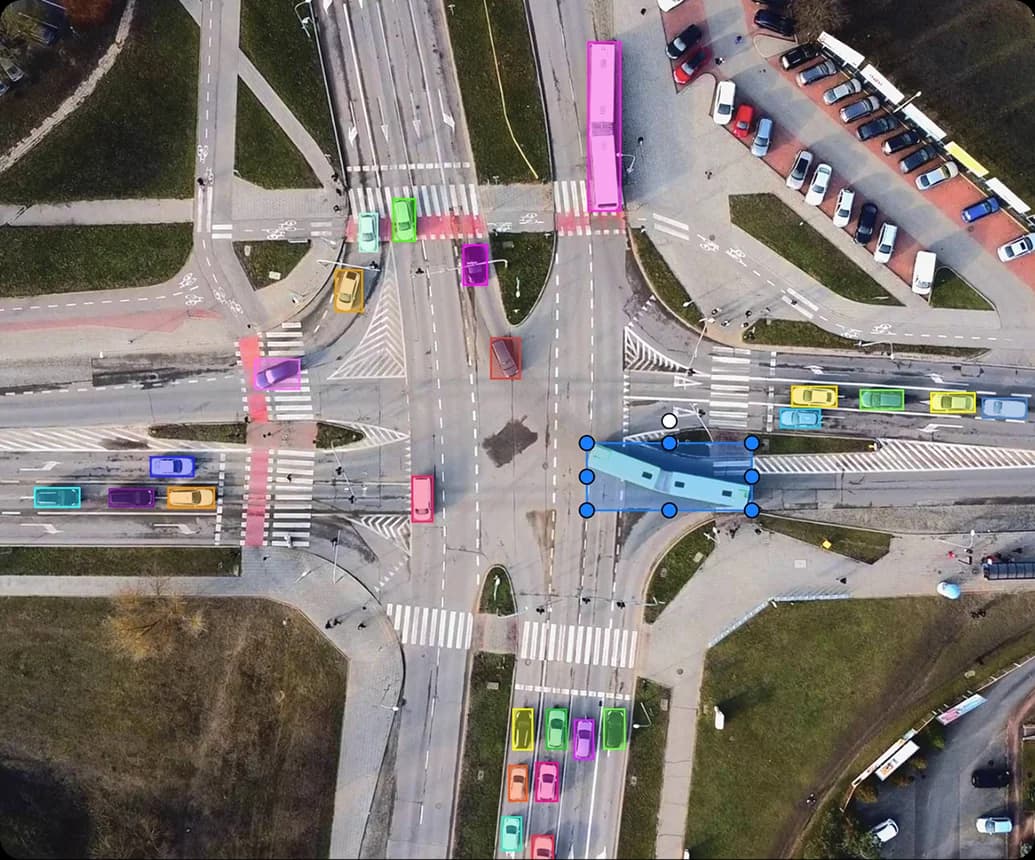
Label vehicles, pedestrians, cyclists, and other road agents across camera and LiDAR frames for detection, tracking, and motion prediction.
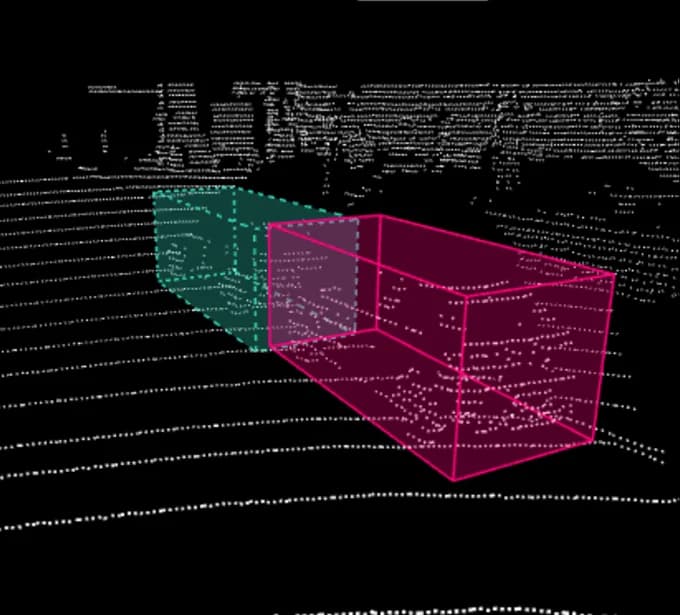
Annotate cuboids directly in point clouds and align them with synchronized camera views to train multi-sensor perception models.

Trace roads, railways, power lines, pipelines, and other assets for mapping, inspection, and maintenance workflows.

Detect and classify signs, signals, and road markings, capturing occlusion, damage, and validity as structured attributes.
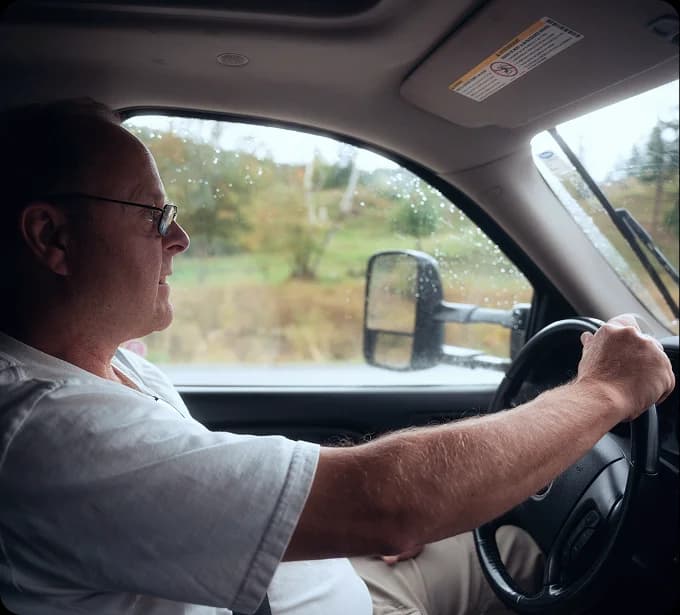
Label gaze direction, head pose, body keypoints, and occupant state for driver attention, drowsiness, and occupancy systems.
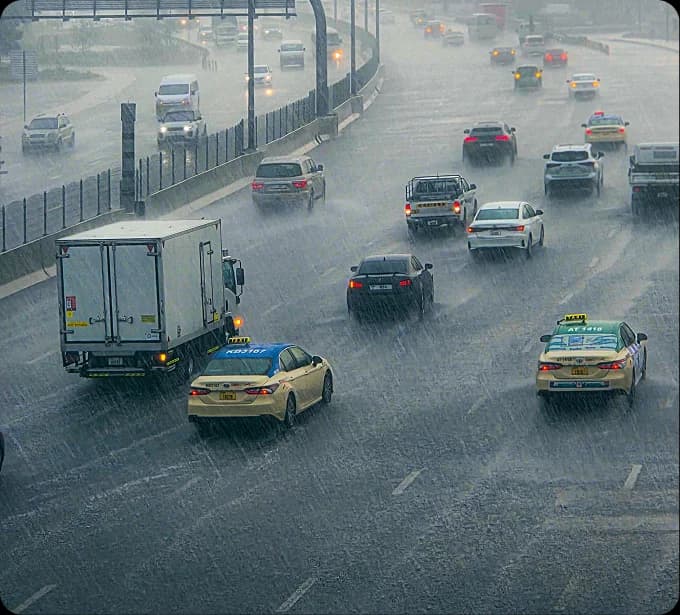
Annotate rare scenarios, adverse weather, and near-miss events to close the gaps that dominate perception failure rates.
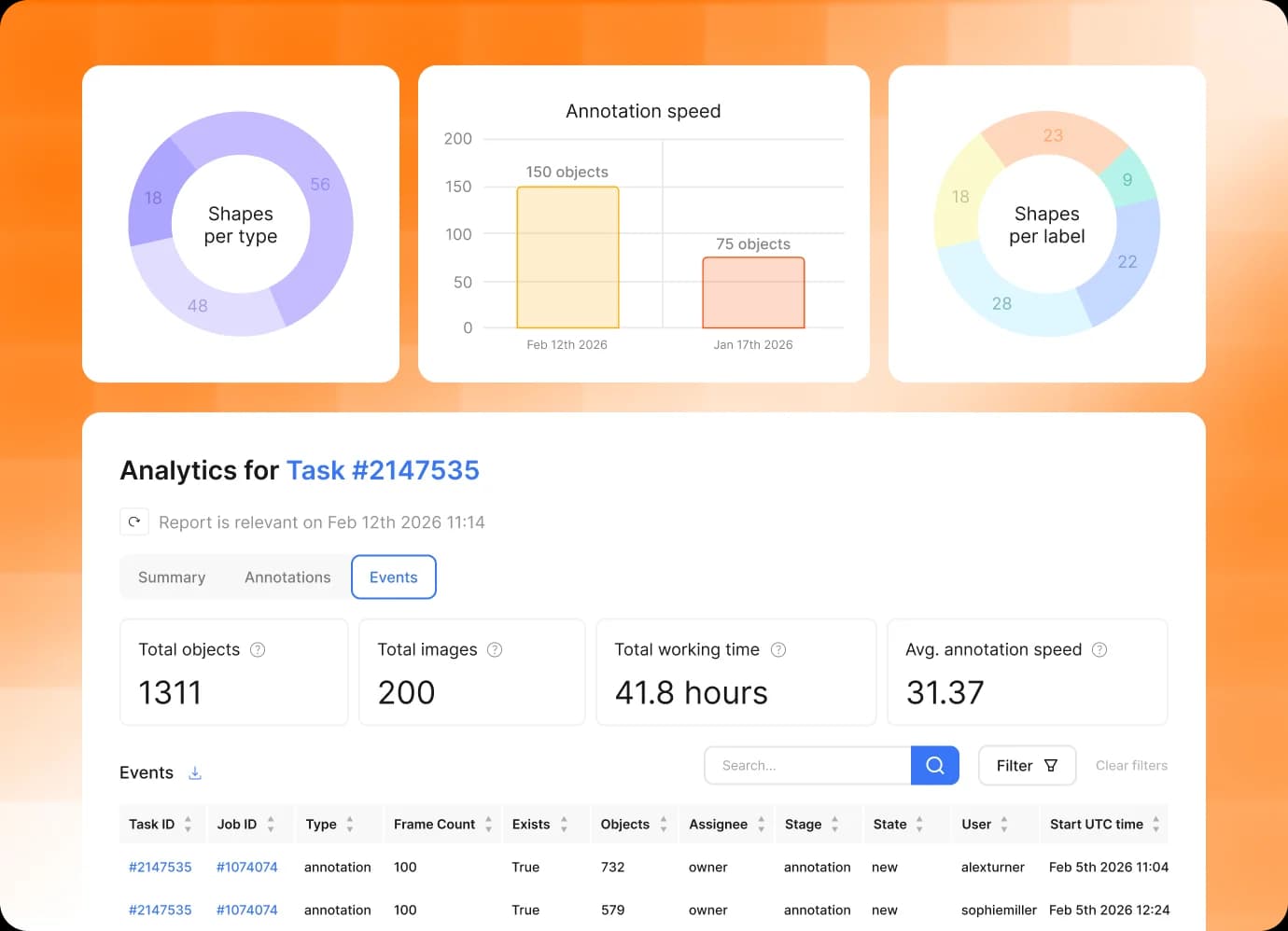
Import multi-camera video, LiDAR point clouds, and radar capture, annotate in 2D and 3D, coordinate multi-stage review, and export model-ready datasets from one workspace.
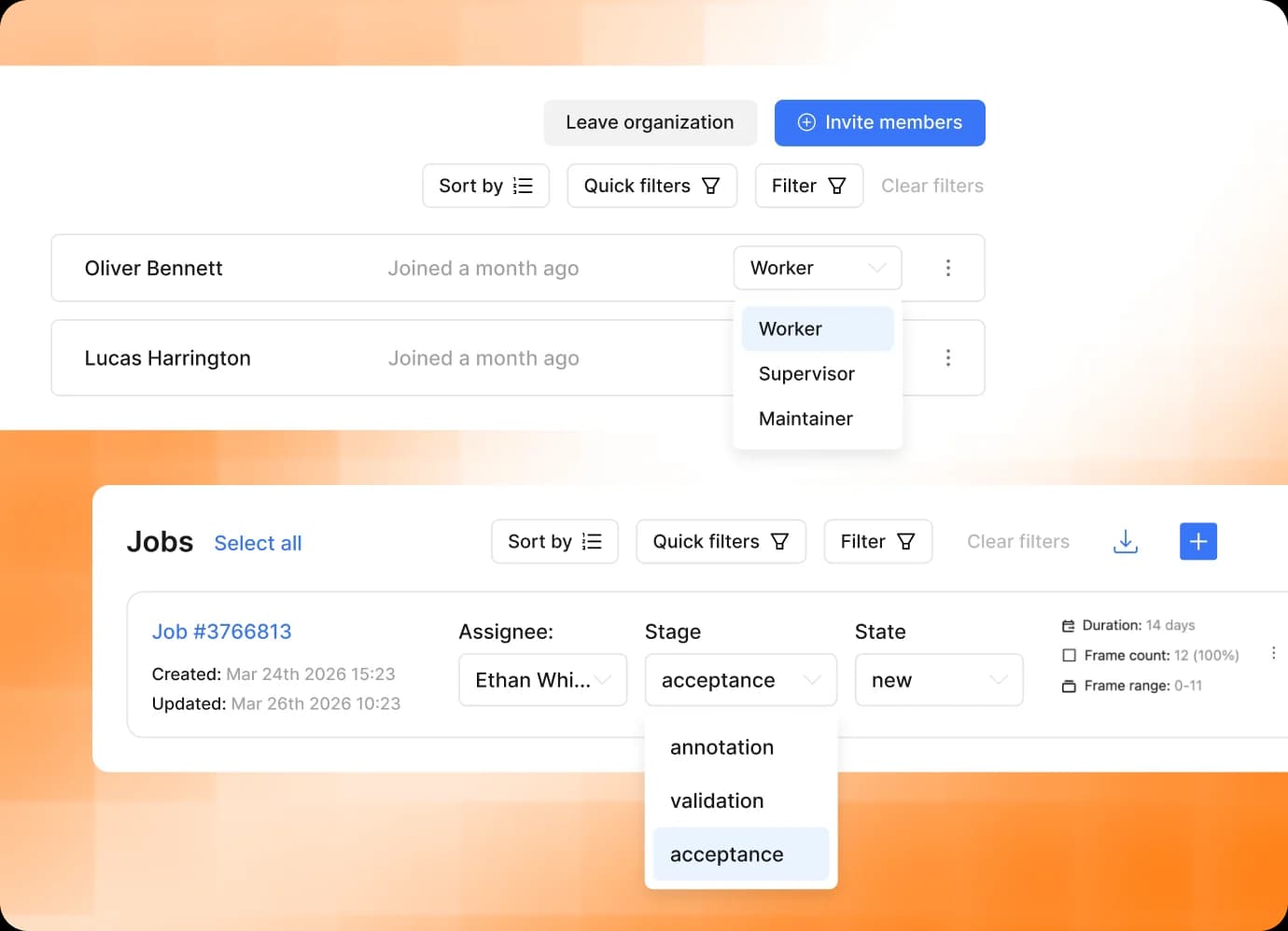
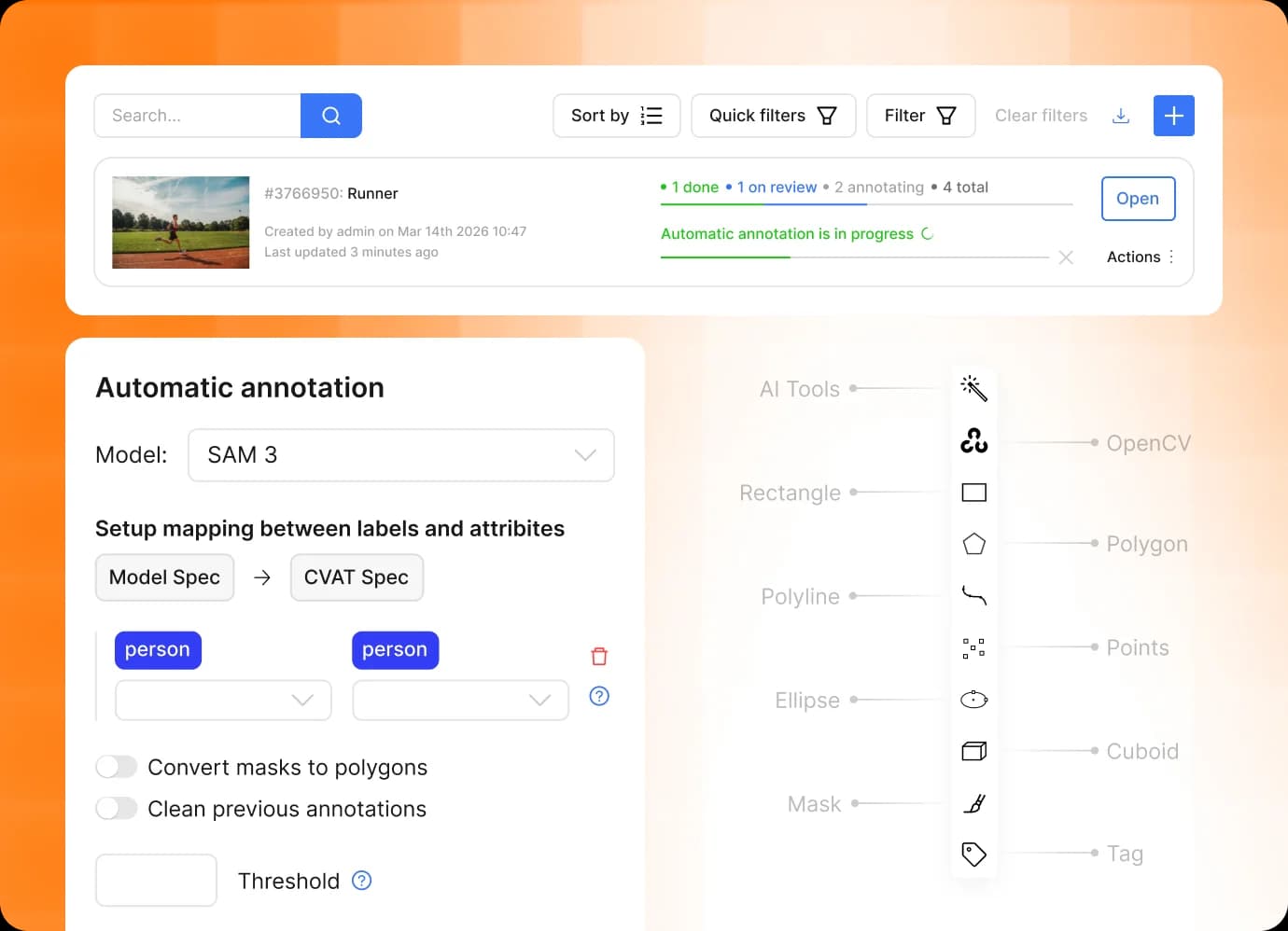
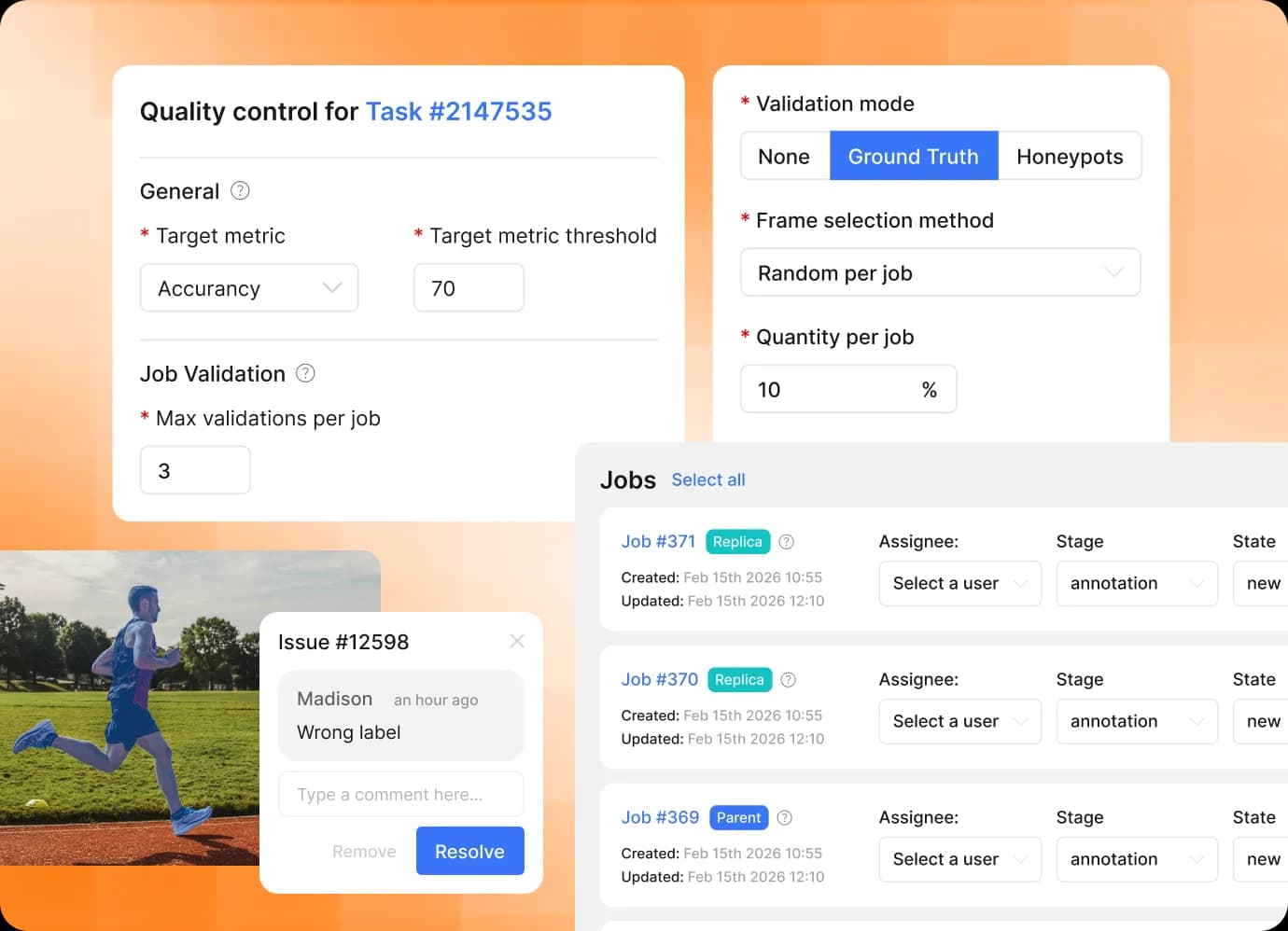
Provide your drive data, object taxonomy, annotation guidelines, and quality requirements. Our project managers, annotators, and validators handle setup, labeling, review, and final delivery.
Keep labels consistent across sensors, control where drive data is processed, and scale when perception workloads spike.
Align 3D cuboids in LiDAR point clouds with synchronized camera views, then maintain object identity across drive sequences with track mode and keyframe interpolation.
Use CVAT Online, deploy Enterprise in your infrastructure, or build on Community to meet data-residency, OEM confidentiality, and pre-release vehicle requirements.
Add CVAT Labeling Services for re-collections, new edge-case classes, or sudden backlogs without moving the project to a separate annotation system.
“CVAT helped me build an AI-powered inventory counting solution for warehouse operations. The annotation workflow was efficient, and it made it much easier to create high-quality training data for accurate object detection and counting.”

Sukanya Suman Kalyan
Azure Data Engineer, Deloitte
“We selected CVAT after evaluating several options and determined it was the best fit for our instance segmentation workflows. Features such as automatic bordering and bitmap visualization help us improve annotation quality while maintaining high productivity.”

Jorge Rojas
Ph.D. Candidate & Research Assistant, Purdue University
“SIYTE is an AI-powered intelligence platform connecting cameras, sensors and systems with CVAT playing an instrumental role in supporting our data annotation and model training function. CVAT is a reliable and easy to use tool that genuinely supports how our teams build and refine computer vision models.”

Jamie Gale
Chief Technology Officer, SIYTE
“At Dragonfly AI we help brands measure creative effectiveness of marketing materials e.g. packaging, advertisements etc. using patented AI. CVAT helps us efficiently track attention-critical areas in video ads and feed structured annotation data into our proprietary attention measurement algorithm. The platform is straightforward, reliable, and fits naturally into our workflow.”

Will Champion
Customer Success Executive, Dragonfly AI
“We began our AI journey with CVAT because, at the time, it was the only solution truly bridging the gap between raw data capture and practical model training workflows. Years later, it continues to be a foundational part of our pipeline thanks to its robustness, flexibility, and deep alignment with real-world computer vision development needs.”

Maikel Boerebach
Business Development Manager, AKL
“We chose CVAT for its strong balance of capability and cost control. It allows us to build and manage our annotation workflows without unnecessary overhead.”

Craig Metcalfe
COO/CPO, Illuminex AI
CVAT can be used with multi-camera video, image sequences, and LiDAR point cloud data in supported formats. Teams commonly use it to build training data for autonomous driving perception, ADAS, traffic scene understanding, and in-cabin monitoring.
Yes. Track mode propagates an object across frames and interpolates between keyframes, maintaining a consistent identity for the full sequence. This matters for tracking and motion prediction datasets, where identity switches are a common source of label error.
Road agents are usually boxes in 2D and cuboids in 3D. Lane markings and road boundaries are polylines; drivable surface and free space are polygons or masks. In-cabin work leans on skeletons and points for head pose and body keypoints. Occlusion, truncation, and object state are recorded as attributes rather than as separate classes, which keeps the class list small enough to train on.
Yes. Import predictions from your current stack or connect a compatible custom model, then have annotators confirm, correct, or reject. Labeling the difference between your model and ground truth is usually faster than labeling from scratch, and the disagreements are the part of the dataset with real training signal.
CVAT supports connected cloud storage including Amazon S3, Azure Blob Storage, Google Cloud Storage, and Backblaze B2, so sequences offloaded from a collection fleet can be annotated where they land instead of being staged a second time.
Track mode makes identity a property of the track rather than something re-asserted frame by frame, which removes most switches at the source. Review stages and ground-truth jobs then catch the ones that remain — they cluster around occlusion and re-entry, so those segments are worth reviewing first.
Yes. The REST API, Python SDK, and CLI let you create tasks, assign work, monitor status, and pull completed annotations programmatically, so mined scenarios can queue for labeling without anyone opening the interface.
Yes. The service covers setup, workforce allocation, annotation, review, quality control, and delivery against your taxonomy and acceptance criteria — which suits perception programmes where a re-collection or a new edge-case class adds months of work at short notice.
Yes. CVAT Labeling Services can handle project setup, workforce allocation, annotation, review, quality control, and final delivery against your taxonomy, guidelines, and acceptance criteria. This works for one-time mapping backlogs, seasonal surveys, and recurring regional or global monitoring programs.
Manage annotation with your own team or have CVAT deliver a validated dataset for your model.
Free plan available • No credit card required • GDPR & CCPA compliant
From aerial imagery analysis and infrastructure inspection to insurance damage assessment, thousands of ML teams trust CVAT for labeling and managing their training data.
Didn’t find your use case? Contact us to discuss your project.